




Sandblaster Not Blowing Sand? 10 Causes & Field Fixes
Sandblaster Not Blowing Sand? 10 Causes & Field Fixes
Fast Diagnostic Table
Match your symptom, jump to the cause, apply the fix. It covers the most common abrasive feed problems we see in the field.
| What you see | Most likely cause | Field fix |
|---|---|---|
| No media at all, only air | Empty hopper / shut metering valve | Refill hopper; open metering valve fully |
| Sand stops after a few seconds | Clogged sand valve or damp media | Clear valve; sieve and dry abrasive |
| Weak or no suction at pickup | Worn venturi | Replace venturi, re-check bore |
| Air hisses but no flow | Hose kink or coupling leak | Straighten hose; reseal couplings |
| Cycles of blast then starve | Low/unstable air pressure | See air-supply guide; upsize compressor |
| Recycled media won’t return | Reclaimer separator blocked | Clean separator; check airflow |
10 Causes Your Sandblaster Isn’t Blowing Sand
1. The media hopper is empty
You see: pure air, no abrasive, right from the start. Root cause: the simplest and most overlooked cause — the hopper ran dry, or the level sensor failed. Fix: top up the hopper and keep it at least one-third full while working. If you keep asking “ why is my sandblaster not sucking up sand” with a full pot, move to cause #2.
2. The sand valve/media outlet is blocked
You see: flow starts, then dies within seconds. Root cause: a stray bolt, paint chip, or oversized grain jams the valve throat — the classic sand valve clogged fix scenario. Fix: cut air, open the valve, clear the obstruction, then run a 12–20 mesh sieve before refilling. Keep the lid closed so debris stays out.
3. Damp abrasive that cakes and won’t flow
You see: media bridges above the valve and refuses to drop. Root cause: no water-and-moisture separator on the air line; condensation wets the media — the textbook damp abrasive sandblaster problem. Fix: fit a coalescing moisture separator with auto-drain, spread wet media to dry, and store abrasive in sealed bins. Steel grit rusts fast in humid shops.
In coastal or rainy regions, we spec a refrigerated dryer, not just a separator — the difference is night and day.
4. A worn venturi has lost its suction
You see: air blows normally, but the pickup tube pulls almost nothing. Root cause: the venturi throat is eroded — venturi worn sandblaster symptoms include louder air noise, weak lift, and media that barely moves even at full pressure. Fix: remove and inspect the venturi bore for scalloping; replace it. Suction drops sharply once the profile is damaged, so don’t sand it smooth — swap it.
5. The nozzle bore is internally blocked
You see: media reaches the nozzle but won’t exit, or exits in spurts. Root cause: fine debris or a hardened abrasive fragment lodged in the nozzle. Fix: back-flush with air, then a soft pick; if the bore is damaged, replace the nozzle. Track nozzle hours — an oversized bore also wastes media. Never ream a tungsten-carbide nozzle with steel; you’ll ruin the liner.
6. Kinked hose, undersized line, or leaking couplings
You see: air hisses at joints; flow is weak and pulses. Root cause: the blast hose is folded, too narrow for the nozzle, or couplings leak and bleed pressure before the venturi. Fix: straighten or replace the hose with the correct ID, tighten and reseal couplings with fresh O-rings, and keep runs short. A 1/2-inch pressure drop at a bad coupling can halve your media flow.
7. Air back-blows because pressure can’t hold the media
You see: media actually blows backward out of the hopper. Root cause: air pressure too low to overcome the media column — a supply problem, not a media problem. This is where abrasive feed problems masquerade as mechanical faults. Fix: confirm your compressor delivers the CFM and PSI the nozzle needs. If pressure sags under load, size up the compressor or drop to a smaller nozzle — full detail in the air-compressor CFM & PSI guide.
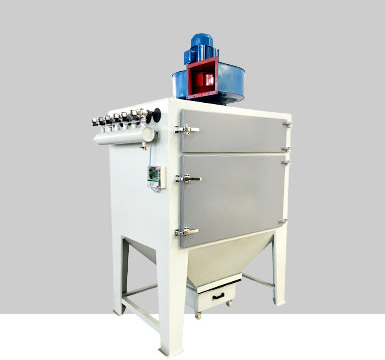
8. The reclaimer / separator is blocked
You see: recycled media piles up and stops returning; fresh feed also starves. Root cause: the recovery separator is packed with fines or the reclaim airflow is wrong — the blast pot not flowing abrasive pattern on recovery systems. Fix: clean the separator, verify reclaim fan RPM, and balance the reclaim airflow to the blast airflow. Running reclaim too high vacuums fine usable media out the exhaust. Proper recycling also cuts media cost — see how to recycle abrasives.
9. Valves not fully open, or a failed regulator
You see: intermittent flow that tracks with valve position. Root cause: a ball valve left half-closed, or a regulator diaphragm that has failed and bleeds set pressure. Fix: open all supply valves fully, then test the regulator output under load with a gauge. Replace a drifting regulator — guessing pressure wastes media and finish quality. A $40 gauge at the cabinet inlet ends “mysterious” pressure loss arguments.
10. The metering valve is shut or malfunctioning
You see: everything checks out, but no media moves. Root cause: the metering (feed-rate) valve is closed, jammed with cured media, or the actuator failed. Fix: confirm the valve is open, free it with a gentle tap and clean media, and recalibrate feed rate. If it seizes repeatedly, replace the valve body. On remote-controlled pots, a dead solenoid at the metering valve looks exactly like an empty hopper — check both.
Preventive Maintenance Checklist
Most abrasive feed problems are preventable. Run this checklist every shift, and you will rarely see a no-sand call:
✔ Drain the compressor receiver and fit a working moisture separator — kills damp-media clogs.
✔ Keep the abrasive covered and dry; sieve before loading.
✔ Inspect the venturi and nozzle bore weekly for wear.
✔ Confirm coupling O-rings are sealed; no air hiss at joints.
✔ Verify inlet pressure at the cabinet under load, not at the tank.
✔ Clean the reclaimer separator and check reclaim airflow monthly.
✔ Exercise the metering valve so it never seizes shut.
✔ Log nozzle hours and replace at the wear threshold.
Frequently Asked Questions
When to Call the Manufacturer
If you have cleared the valve, confirmed dry media, replaced the venturi, and still see no flow after verifying inlet pressure under load, the fault is likely in the pot body, the remote-control circuit, or the reclaim system. At that point, a sandblaster clogging issue becomes a warranty or service call. TS Blasting field engineers can remote-diagnose from your gauge readings and ship the exact wear part — no guesswork.
Free Sample Blast & Application Sizing
Not sure which nozzle, media, or compressor your parts actually need? TS Blasting will blast a sample on our floor and return the finish, the media spec, and a free CFM/PSI sizing for your shop.
Request a Free Sample Test All Sandblasting Problems in One Index


Recent News
1.Smallest Air Compressor for Sandblasting: CFM & PSI Guide
2026-10-122.Industrial Sandblasting Machine Troubleshooting & Common Problems
2026-07-033.How much CFM does a sandblast cabinet need
2025-01-034.Low-CFM Sandblasting: How to Get Effective Results
2025-11-015.How to Recycle Abrasives for Blast Cabinets
2025-07-03