



Low-CFM Sandblasting: How to Get Effective Results
Getting effective sandblasting results is all about balancing three things: Air Volume (CFM), Air Pressure (PSI), and the Blasting System itself.
1. What is CFM and Why Does It Matter?
CFM (Cubic Feet per Minute) is simply the volume of air your compressor delivers.
Relate it to blasting: "It's the driving force behind your abrasive. More CFM generally means more power, a wider blast pattern, and faster material removal."
Insufficient airflow leads to sputtering, slow progress, and frustrating inconsistency. It's like trying to water a garden with a leaky hose—you just won't get the job done efficiently.
2. Mastering Low-CFM Sandblasting
2.1 A smaller nozzle opening requires less CFM
Use the Smallest Nozzle Possible: This is the real secret. The nozzle orifice size is the single biggest factor in air consumption. A small nozzle chokes the flow, requiring less CFM to maintain pressure.
2.2 Prioritize a steady stream over a wide, weak one
When airflow (CFM) is insufficient (e.g., using a small air compressor), you must make a trade-off between "blasting range" and "blasting intensity."
A wide, weak stream (The Mistake): If you try to use a large nozzle to clean a large area at once, it requires huge airflow. If your compressor's CFM is too low, the pressure drops sharply, and the blast merely "dusts" the surface without cleaning it.
A steady, narrow stream (The Solution): Using a small nozzle creates a narrow blasting range. While you can only clean a small area at a time, your low-flow compressor can maintain continuous high pressure. This stable airflow is powerful and effective.
In summary, for sandblasting, maintaining sufficient impact force (pressure) is more important than the area covered.
2.3 Abrasive Media Selection
For low CFM sandblasting, choose lighter, finer blasting media like fine glass beads, garnet, or crushed walnut shells.
These require less energy to propel.
Avoid heavy, coarse media (like large steel grit) with low CFM compressors.
The right media ensures efficient material removal even with reduced airflow.
2.4 Maintaining Optimal Air Pressure
When operating at low airflow, you must strictly maintain a stable air pressure. This may involve stopping intermittently to allow the compressor to recover and build pressure back up.
2.5 Proper Technique
Operating techniques should focus on "slow" and "close." Slow down the nozzle's movement and bring it closer to the workpiece while ensuring overlapping paths. This concentrates your limited energy and ensures even coverage.
3. Equipment Choices for Low-CFM Sandblasting
You can make a small compressor work, but you must use low-CFM equipment. You will sacrifice speed but not effectiveness.
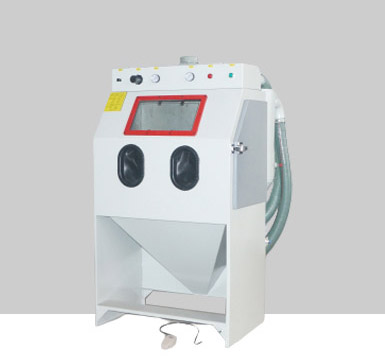
Siphon-Feed Blaster (Good for you)
These use a simple gun that creates a vacuum (the "siphon" or "venturi" effect) to pull abrasive from a hose or an attached hopper. They use significantly less air than pressure pots. Check out our Siphon-Feed Sand Blasting Cabinets.
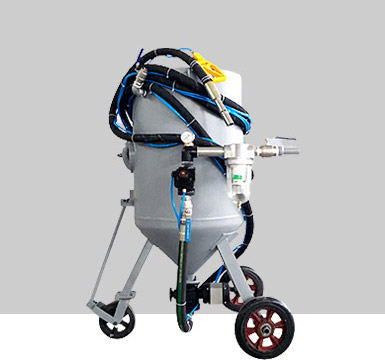
Pressure Blasters (Bad for you)
These systems push abrasive out from a pressurized tank. While powerful, they are extremely air-hungry (often requiring 10-20+ CFM) and are generally unsuitable for small compressors.
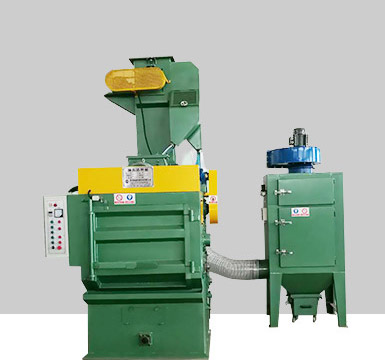
The Industrial Alternative: Shot Blasting Machines
For industrial-scale needs where low CFM sandblasting simply won't cut it, or where you require immense power and consistency, our specialized shot blasting machines are the answer.
These machines use turbine wheels, not compressed air, to propel abrasives (like steel shot). This makes them incredibly efficient for heavy-duty cleaning, descaling, and surface preparation, completely bypassing your compressor's CFM limitations.
"Airless" Pressure Washer Sandblaster
If you don't want to rely on a compressor at all, you can use a special attachment for a gas or electric pressure washer. It uses water pressure to create suction. It is effective but creates a wet and messy process.
Conclusion
Achieving effective sandblasting with low CFM sandblasting is absolutely possible with the right knowledge of nozzle size, abrasive choice, technique, and equipment.
Don't let air compressor limitations hold you back. Whether you need tips for your small sandblaster or are ready to explore industrial-grade efficiency, contact Changzhou Taisheng Machinery Co., Ltd. today.
Need help choosing the right equipment?
Our experts are ready to provide personalized advice and solutions that ensure your surfaces are always perfectly prepared.