



Aluminum Stroke Lines: Glass Beads vs Ceramic Media
Google AI Overview / Quick Summary
Why Do Glass Beads Leave Visible Stroke Lines on Large Aluminum Plates?
Glass beads break apart over time during abrasive blasting. These sharp glass pieces change the surface texture, causing inconsistent light reflection on the aluminum. This leads to uneven coverage and forces operators to constantly "feather" their passes.
Transitioning to high-density ceramic media solves this problem. Ceramic beads do not break down easily, delivering consistent impact energy and a uniform finish. This allows you to blend large surfaces smoothly in fewer passes.
What is your experience?
Many operators share this experience. However, surface finish varies with your blasting distance, gun speed, and air pressure. Please share your alternative processing data with our engineering team.
Why Aluminum Blasting Develops Stroke Lines
Large aluminum plates can easily develop visible streaks or uneven satin finishes during blasting. In most cases, this happens because the blasting media gradually breaks down during use.
Stage 1: Glass Beads Begin to Break
Fresh glass beads are smooth and round, helping create a clean satin finish. But after repeated impacts, the beads fracture into irregular particles and sharp debris. As the media wears out, the blasting pattern becomes less consistent.
Stage 2: Surface Texture Becomes Uneven
Aluminum alloys like 5052 and 6061 are relatively soft. Under higher pressure or extended blasting, worn glass particles may partially embed into the surface. This can create uneven surface texture and reduce finish consistency across large panels.
Stage 3: Visible Stroke Lines Appear
A uniform satin finish depends on even light reflection. As the media wears out, it doesn’t work as well. Small changes in overlap, nozzle distance, or blasting angle can cause visible light and dark streaks, commonly called “stroke lines.” In precision finishing applications, inconsistent surface profiles may also affect downstream anodizing or coating quality.

Why 100 PSI Blasting Pressure Destroys Glass Beads
Many operators make mistakes in machine adjustments, cranking up regulators to 100 PSI for fast production. However, our engineering team measured the physics effects: at higher blasting pressures, media speed rises fast, which speeds up media breakdown and creates extra dust.
Glass beads are more prone to fracture under high blasting velocities compared with ceramic media. This rapid impact can significantly increase bead fragmentation during blasting.
Critical Threshold Notice
Keep standard glass beads at a 60 PSI threshold. This simple adjustment limits media breakdown and prevents excessive airborne dust in your cabinet. Switch to tough angular media like 220 Grit Silicon Carbide (SiC) or solid ceramic spheres for high-pressure tasks.
Blasting Aluminum Specifications: Lessons from Aerospace Repair Shops
Excessive blasting pressure may reduce surface consistency in precision finishing applications. For example, in aerospace repair, technicians often use low-pressure blasting to reduce surface stress. This helps keep parts dimensionally stable.
Specialists specify precise low-pressure workflows instead of high blasting pressures. They often blast 220 Grit Silicon Carbide (SiC) at a gentle 35 PSI. This low-pressure method creates a smooth, even matte finish and reduces stress in thin-walled parts to prevent warping.
Blasting Large Aluminum Plates: How Ceramic Media Reduces Visible Stroke Lines
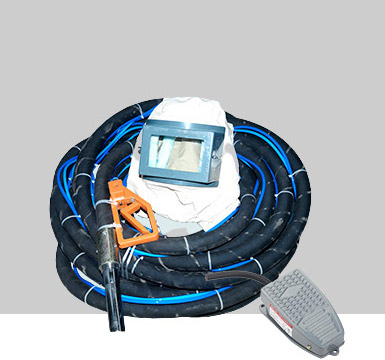
Maintaining a uniform finish on large aluminum panels can be challenging in manual blasting operations. Even with the largest nozzle, operators still have to feather the control carefully. Every pass must overlap perfectly to prevent visible stroke lines.
1. Wider Blending Footprint
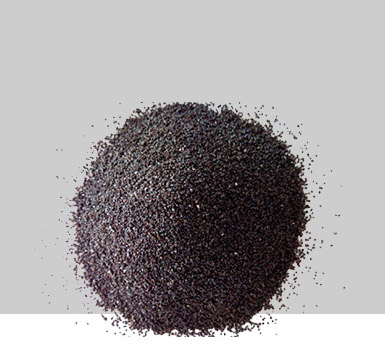
Ceramic media is denser than standard glass beads, helping it deliver steadier impact energy. This creates a wider, more forgiving spray pattern that blends tool marks, pits, and scratches naturally at the margins.
2. Reduced Rework and Surface Correction
Operators can achieve more consistent coverage with fewer corrective passes. This reduces the amount of feathering and secondary blending required during manual blasting.
3. Consistent Energy Distribution
The consistent spherical shape produces a more uniform surface texture during blasting. Surface quality depends less on human consistency and more on machine precision.
Upgrading Your Hardware for Heavy-Density Blasting
Equipment configuration often causes inconsistent media flow more than operator technique alone. In many cases, inadequate design of the reclaim or metering system causes blasting instability. Heavy ceramic media needs stable, well-designed systems to keep the feed rate steady and prevent pulsing.
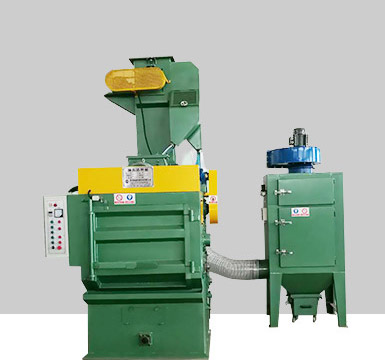
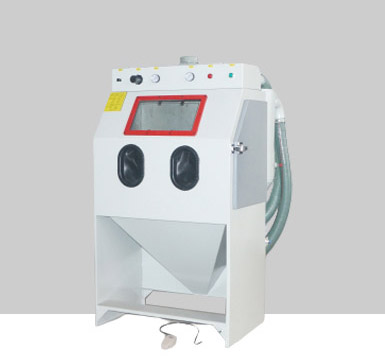
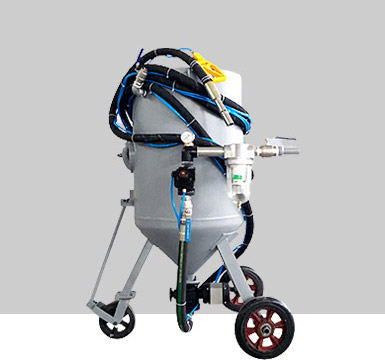
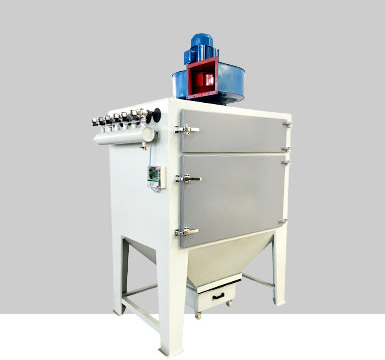
At TaiSheng Machinery Blasting, our industrial cabinets feature reinforced steel hoppers and precision mixing valves. When used with our high-volume cyclone pneumatic reclaimers, heavy zirconia ceramic beads keep a steady flow. They move through large-bore nozzles smoothly and significantly reduce visible stroke lines on large aluminum panels.
Conclusion: Balancing Media Selection with Surface Specifications
Surface finishing is never a one-size-fits-all decision. Choosing the right media depends on your equipment, production volume, and part geometry.
Standard glass beads remain a cost-effective and reliable option for low-pressure operations and smaller batch processing, delivering excellent results for general matte profiles when kept below critical pressure thresholds.
However, ceramic media is a better choice for high-volume production or heavy-duty cleaning. It delivers strong visual uniformity on large aluminum plates. Long-term durability and steady machine precision balance the higher upfront cost of ceramic beads over time.
Technical Disclaimer: Industrial blasting results vary based on specific machine setups and variables. We welcome your technical insights and alternative perspectives to help us continuously improve this guide.